Post Santa Cruz Fires Erosion Control
San Lorenzo River Watershed, Boulder Creek, California | Design Technician
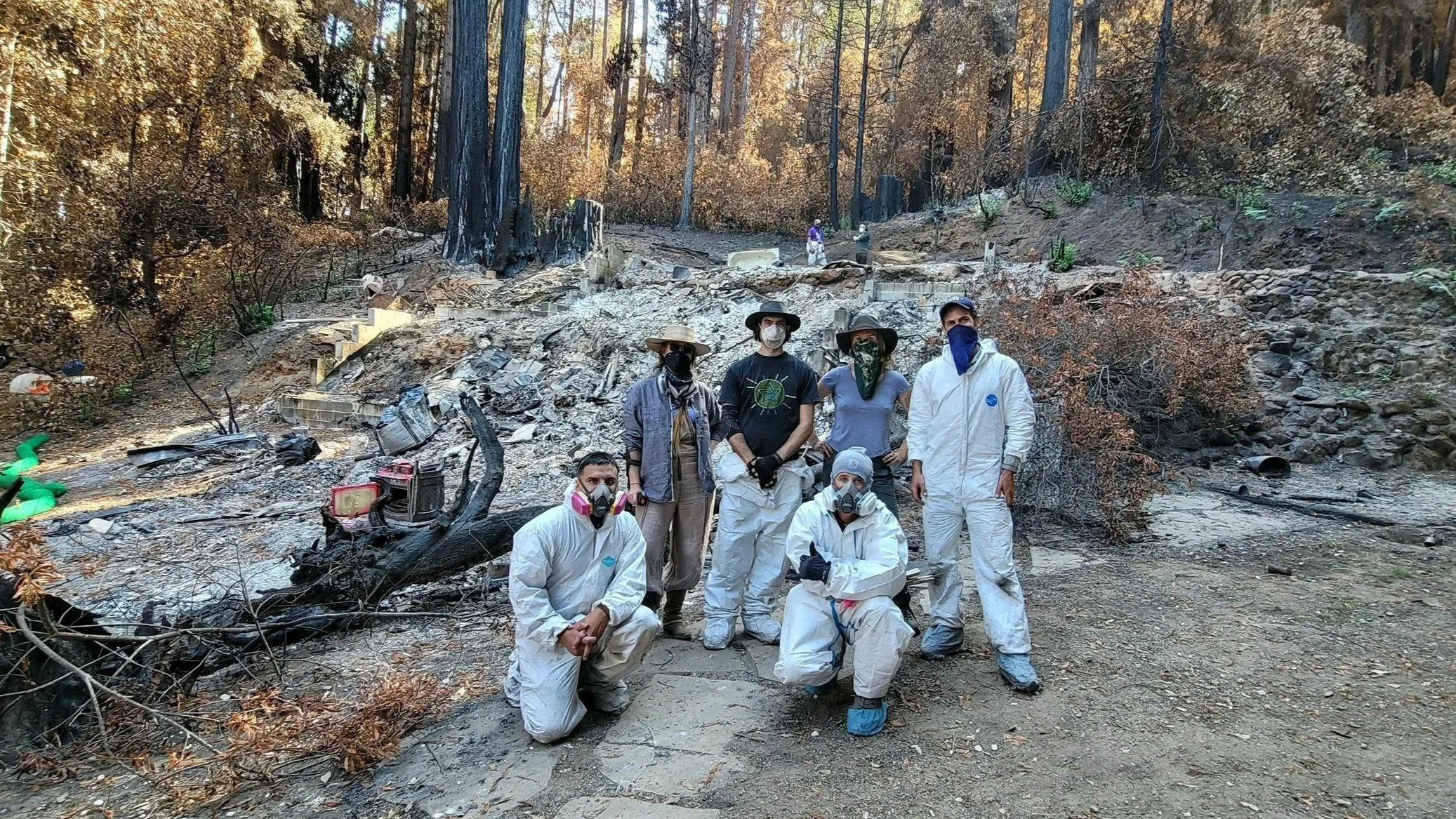
Context: In response to the megafires in Santa Cruz Mountains, CoRenewal, Catalyst Bio amendments and Ecosystem Restoration Camps joined forces to visit several burnt sites.
Task: Waterways threatened by toxic ash from burnt sites.
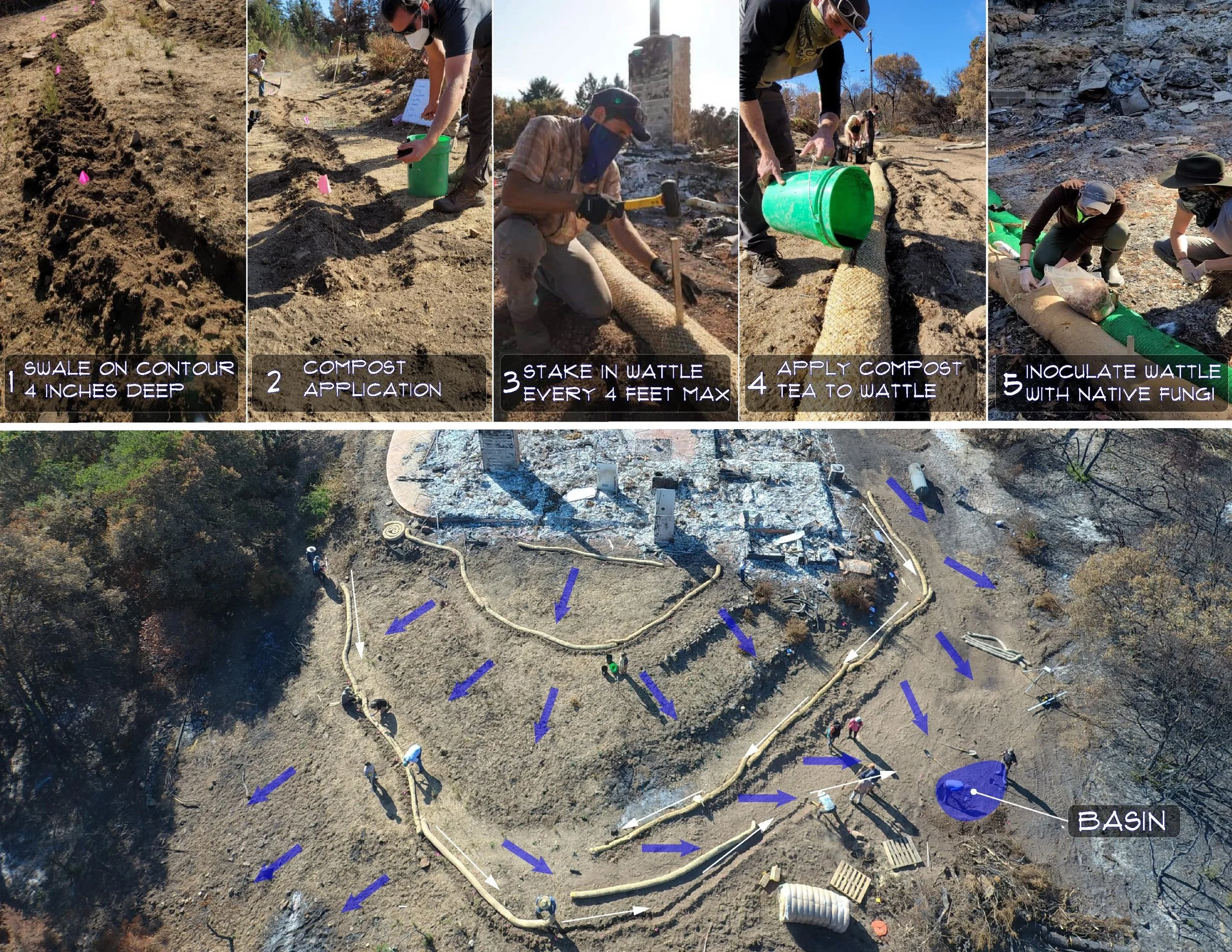
Approach: Installed biodegradable and biologically active wattles and other remediation/erosion control measures. Below are 5 steps that summarize the process:
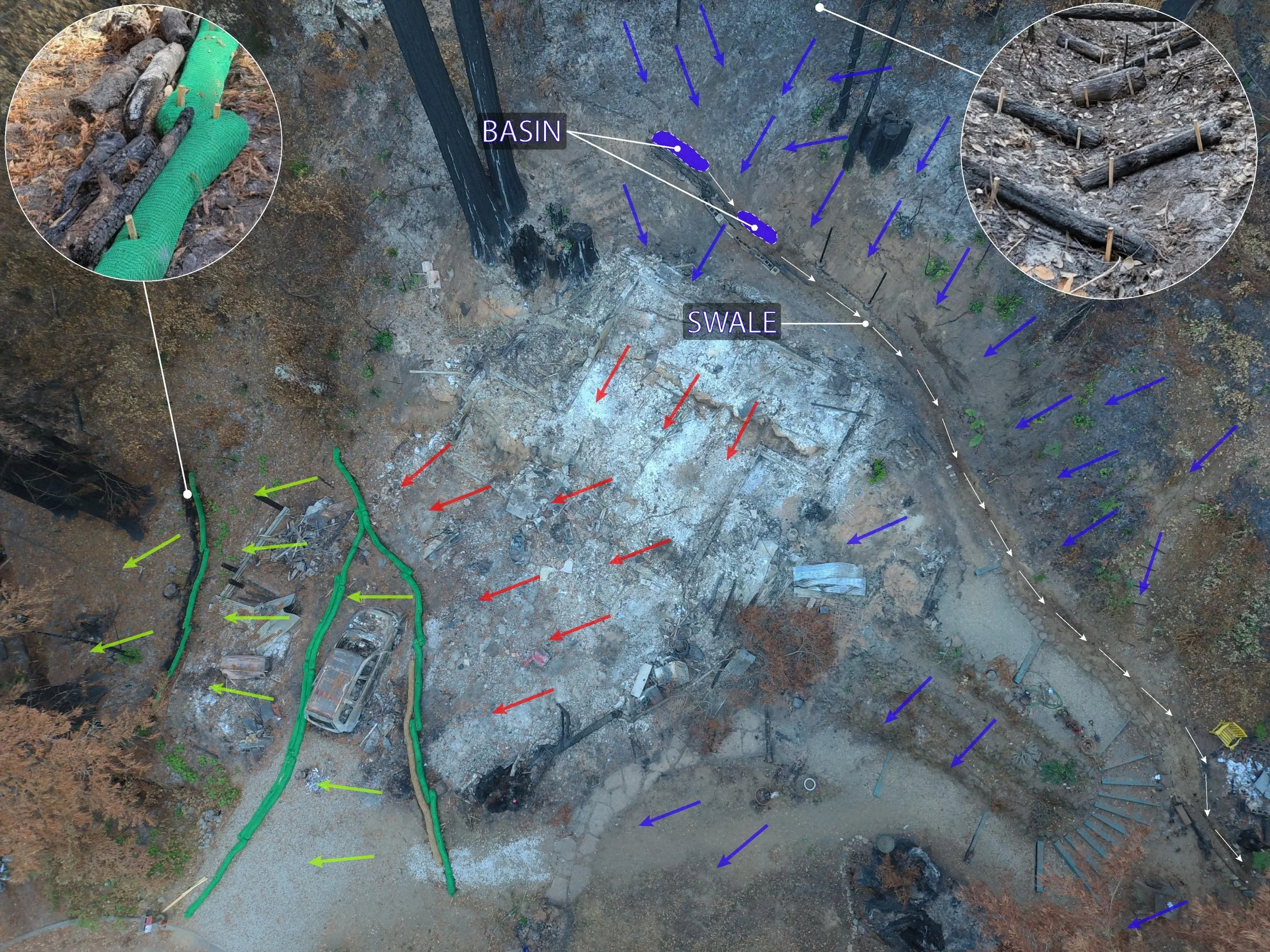
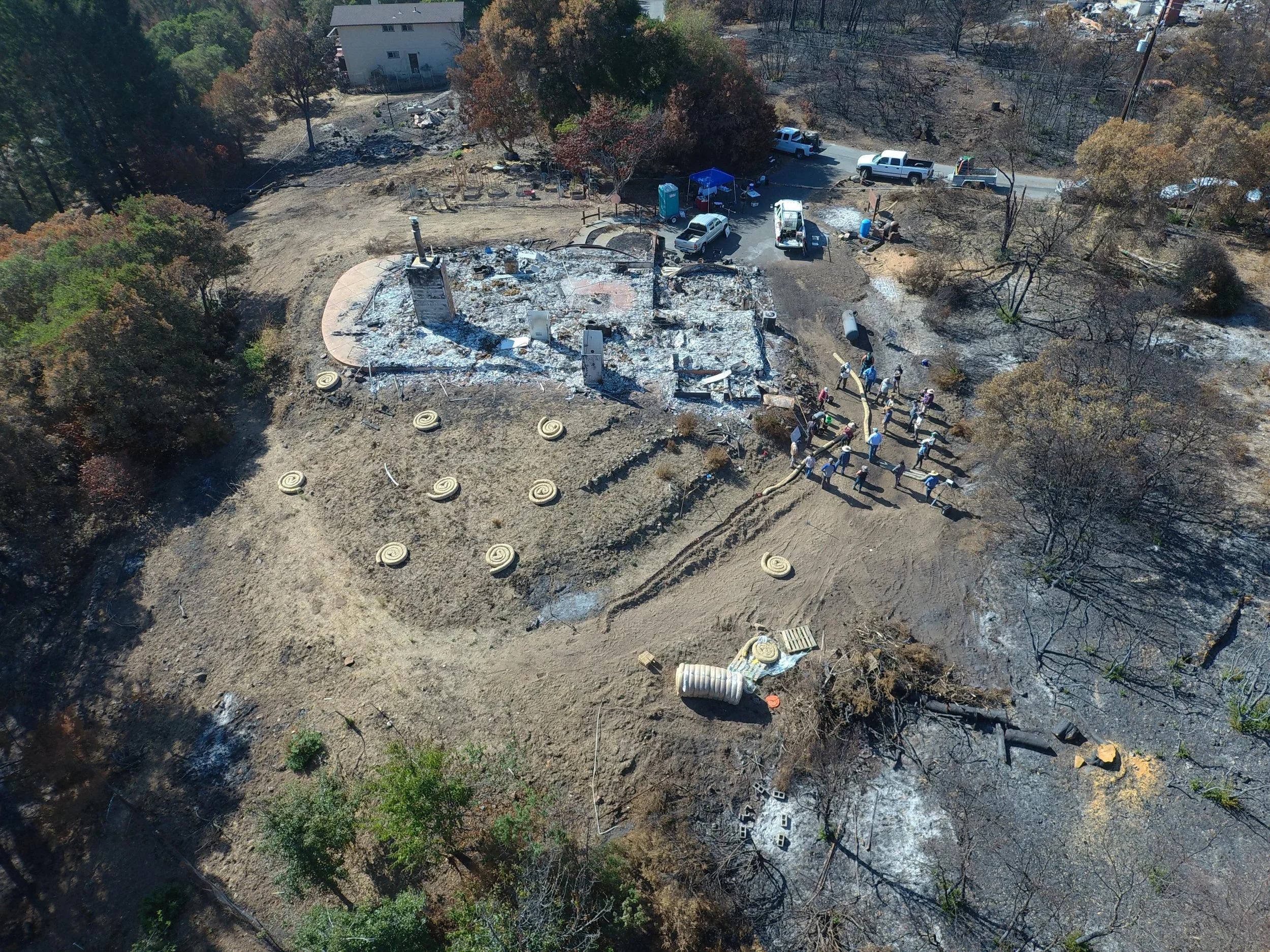
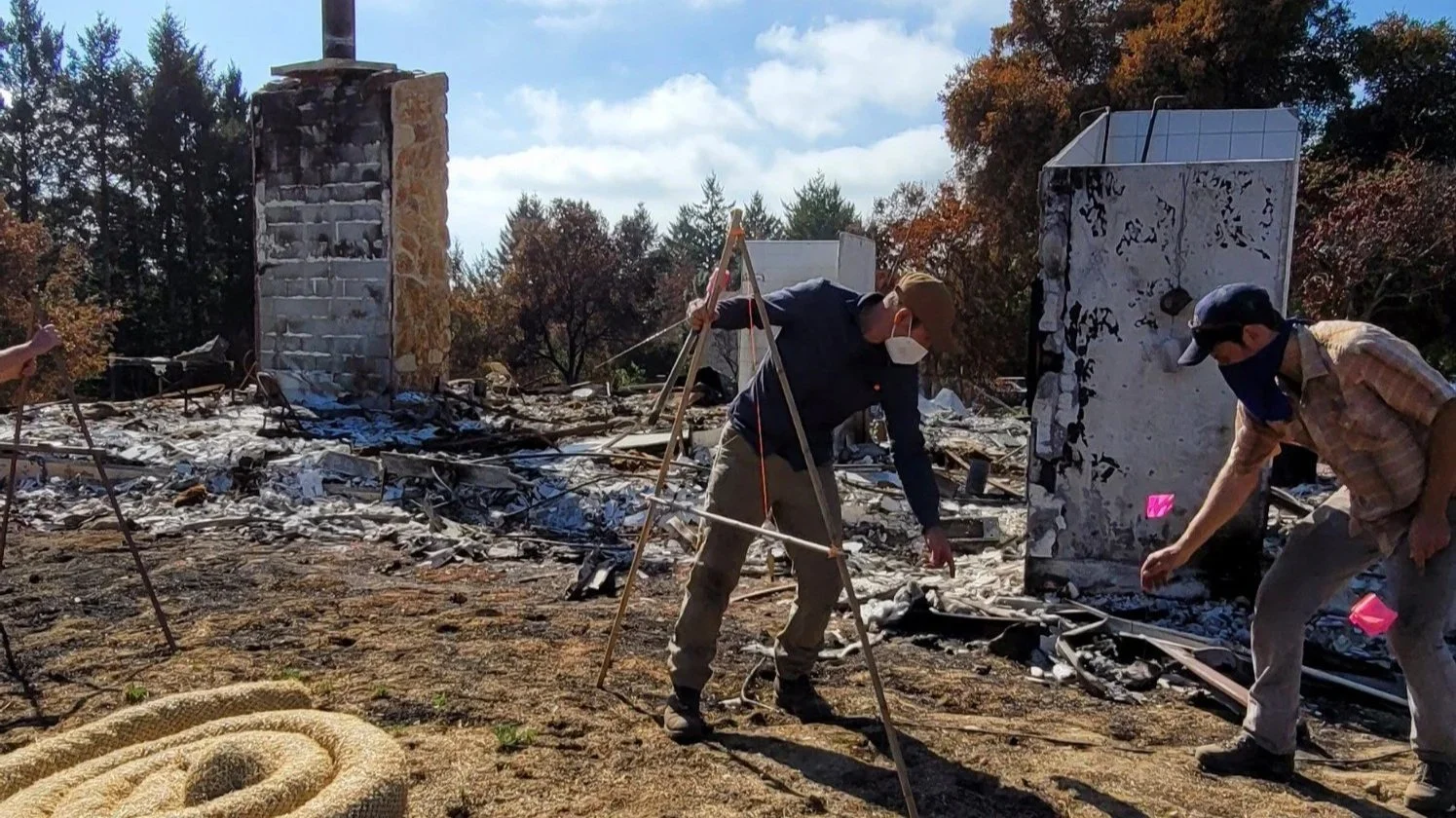
First wattle to be installed 5 feet from the house foundation, on contour. From there, install swales every 10-100 ft. Depending on topography around the permitter house foundation, you want to have more on steeper slopes. Anything is better than nothing here. Some swales were installed slightly off contour to drain water away from toxic areas and/or directed to basins filled with mulch.
Compost from the mother pile was applied before wattle placement to increase microbial remediation.
Place biodegradable wattle inside swale and stake every 4 feet maximum.
Once wattle was set in place, a compost tea of fish hydrolytic and more compost from the mother pile was poured into wattle.
Slice wattle and inoculate native Saprotrophic Fungi into wet spots. Key here is the specie, as the Saprotrophic fungi obtain their nutrition from non-living materials. Horse tail was used for these particular sites.
Key take aways:
Ideally, inoculation should happen before rains.
A lot of burnt sites lack access of water.
Since phase 2 of clean up happens a lot of the time once rains have come, covering burnt cars (most toxic) with plastic goes a long way.
If you have non-biodegradable wattles, place those closest to the house as they will be picked up in phase 2 of clean up.