Silvopasture and Creek Restoration
Petaluma, California | Design Technician
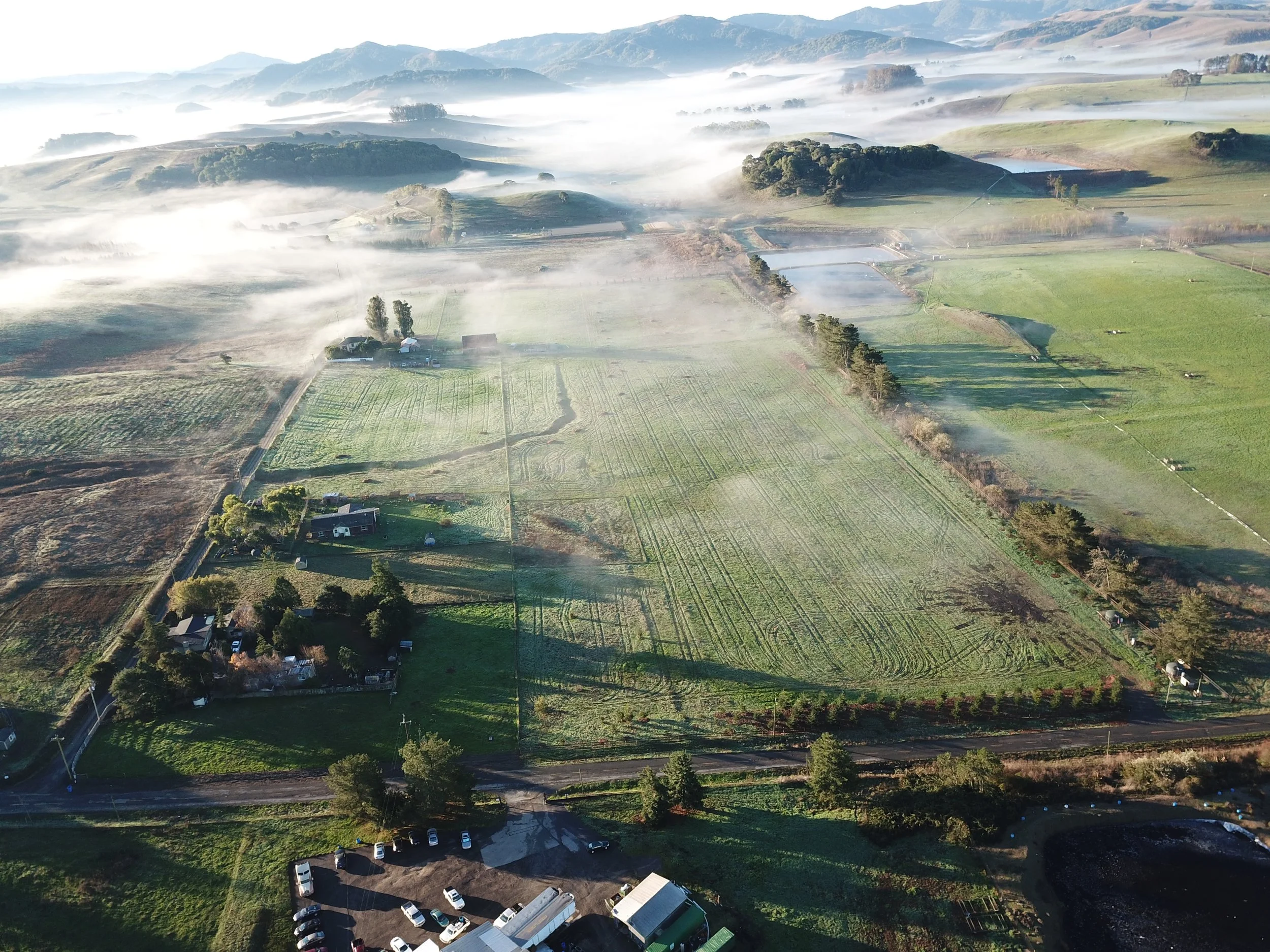
Context: A private landowner in Petaluma sought to integrate productive agriculture with watershed restoration on their property, situated near the wetlands of the Petaluma River. The client had a strong passion for nut trees and the ecological and livestock benefits of rotational grazing. The site included degraded pasture and an incised creek corridor that drains toward the greater Petaluma wetlands, presenting an opportunity to improve on-site productivity while enhancing downstream water quality and habitat.
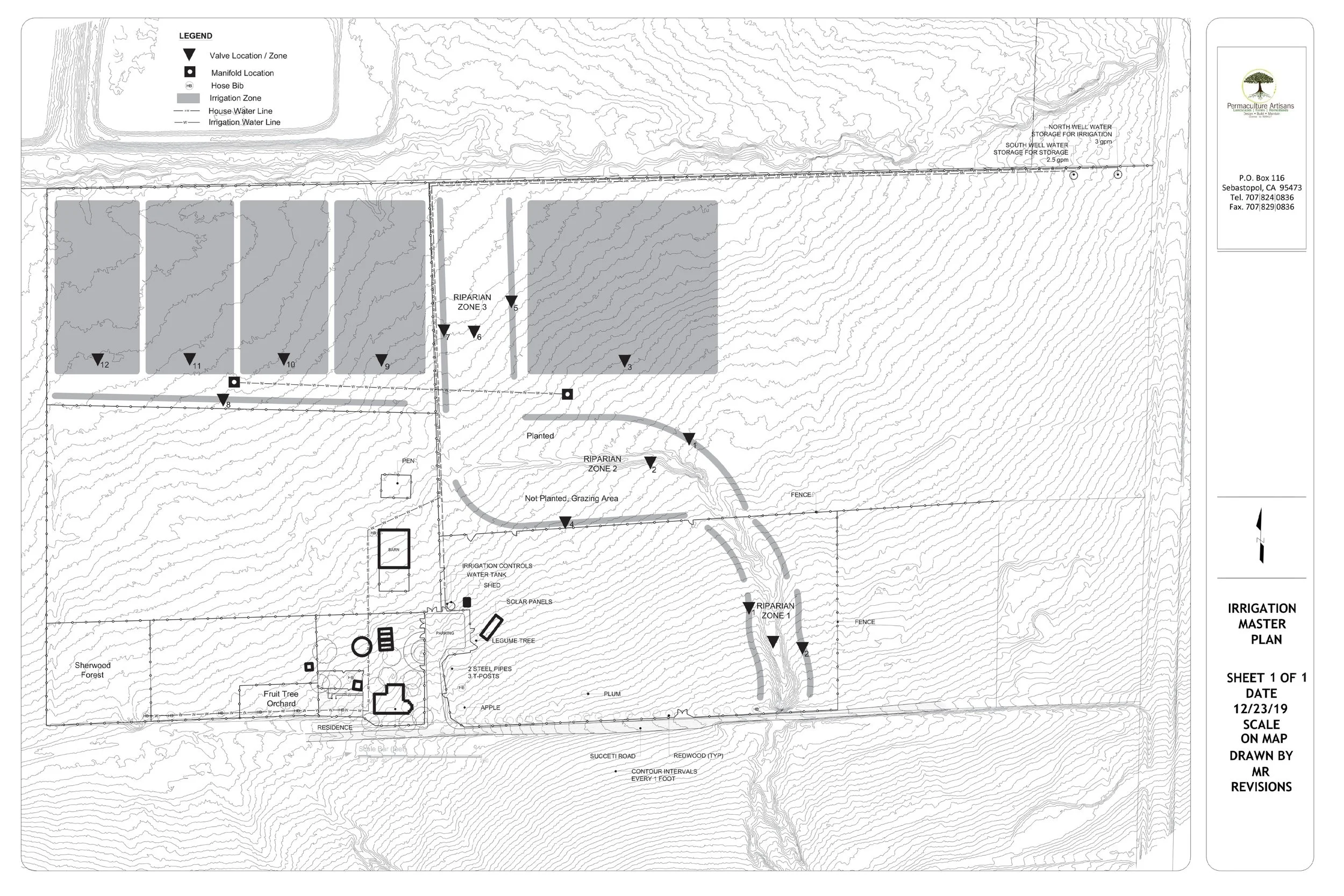
Task: Develop a silvopasture system and adjacent creek restoration that work as one ecological and operational unit. Key objectives included designing tree layouts for future nut production and shade, planning paddocks for rotational grazing, and restoring creek function to benefit both the ranch and the connected wetland system. A critical requirement was an irrigation masterplan for both silvopasture and creek plantings that would support establishment but be phased out once trees were mature and self-sufficient.
Approach:
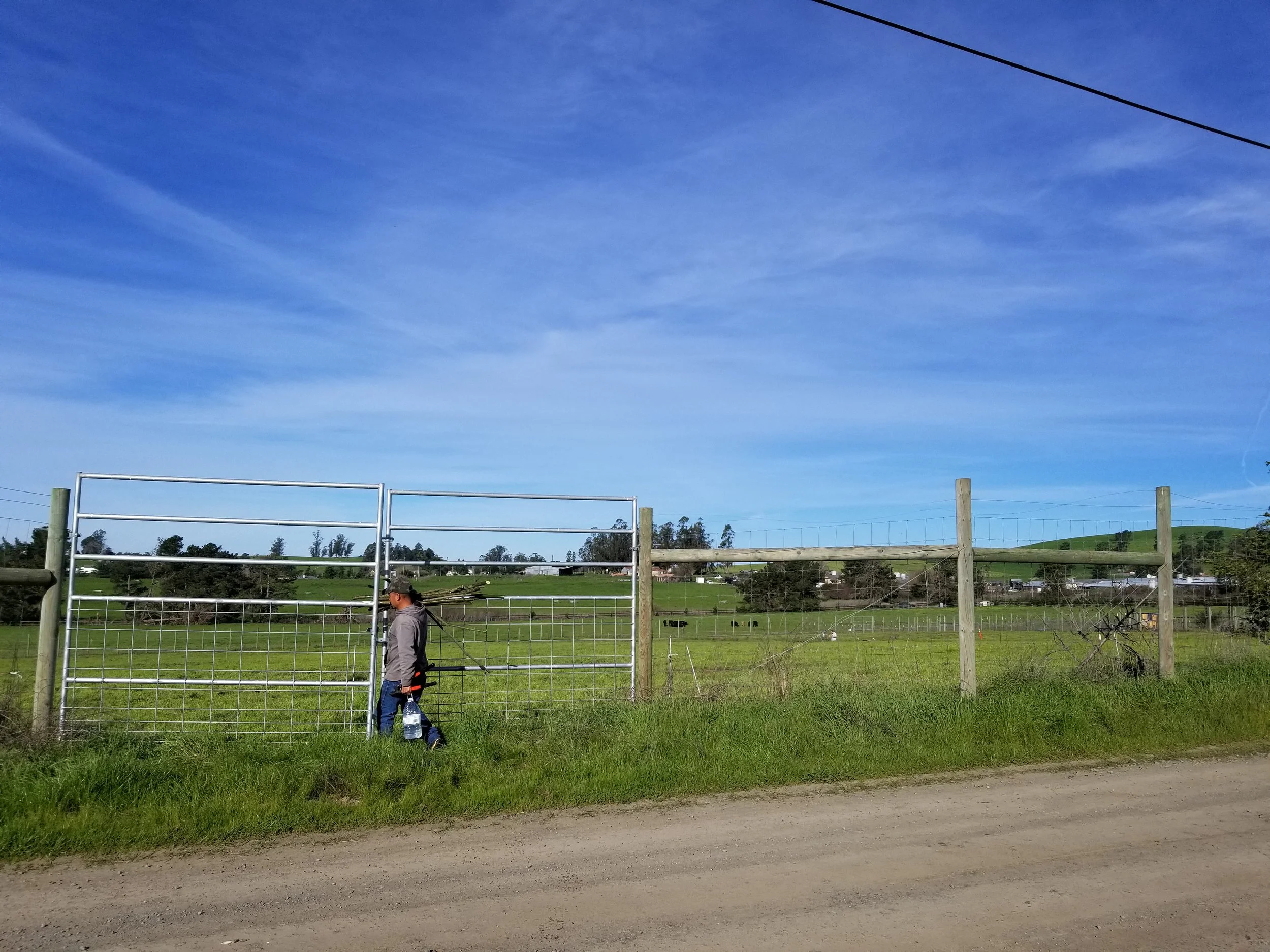
Integrated Design: Laid out silvopasture alleys with diverse tree species selected for climate, soil, and market potential, spaced to allow forage production and livestock movement. Aligned paddock design with grazing plan to support soil health and animal impact cycles.
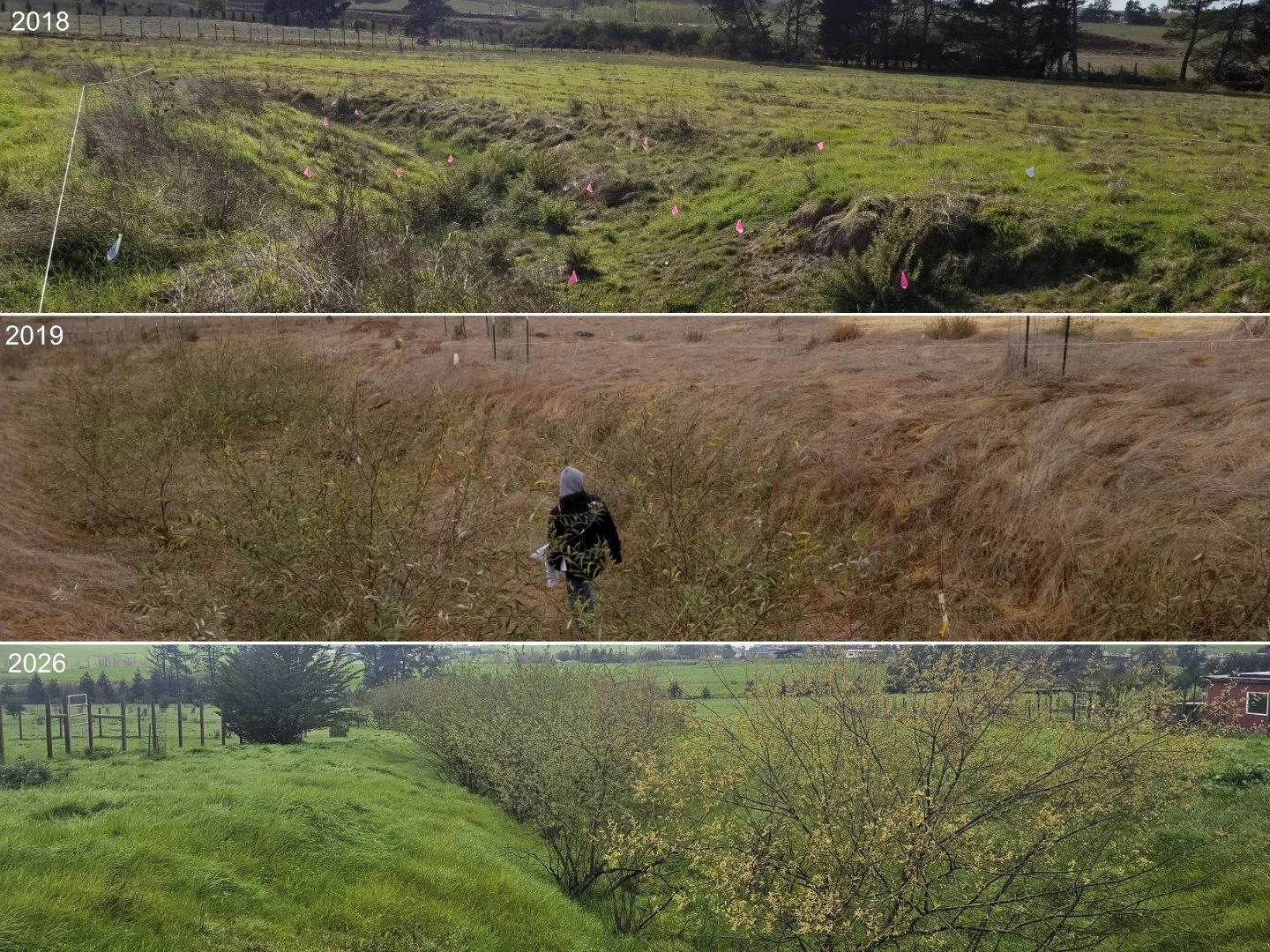
Creek Restoration & Wetland Linkage: Restored riparian corridor using heavy willow plantings for rapid bank stabilization, sediment capture, and habitat creation. Design considerations included improving water quality and floodplain function for downstream Petaluma wetlands.
Establishment-to-Independence Irrigation: Engineered a temporary irrigation masterplan to deliver water to both silvopasture trees and creek plantings during establishment. System designed for decommissioning once root systems access groundwater and canopy provides microclimate benefits.
Implementation & Adaptive Monitoring: Oversaw installation of all plantings and infrastructure. Continual monitoring is ongoing to track tree survival, forage response, grazing impacts, and riparian recovery, allowing adaptive management as the system matures toward a self-sustaining state that supports the broader watershed.